

Table of Contents
Introduction
Cluster lashes and strip lashes are both designed to enhance the natural lash line, but they create a finished lash look in fundamentally different ways.
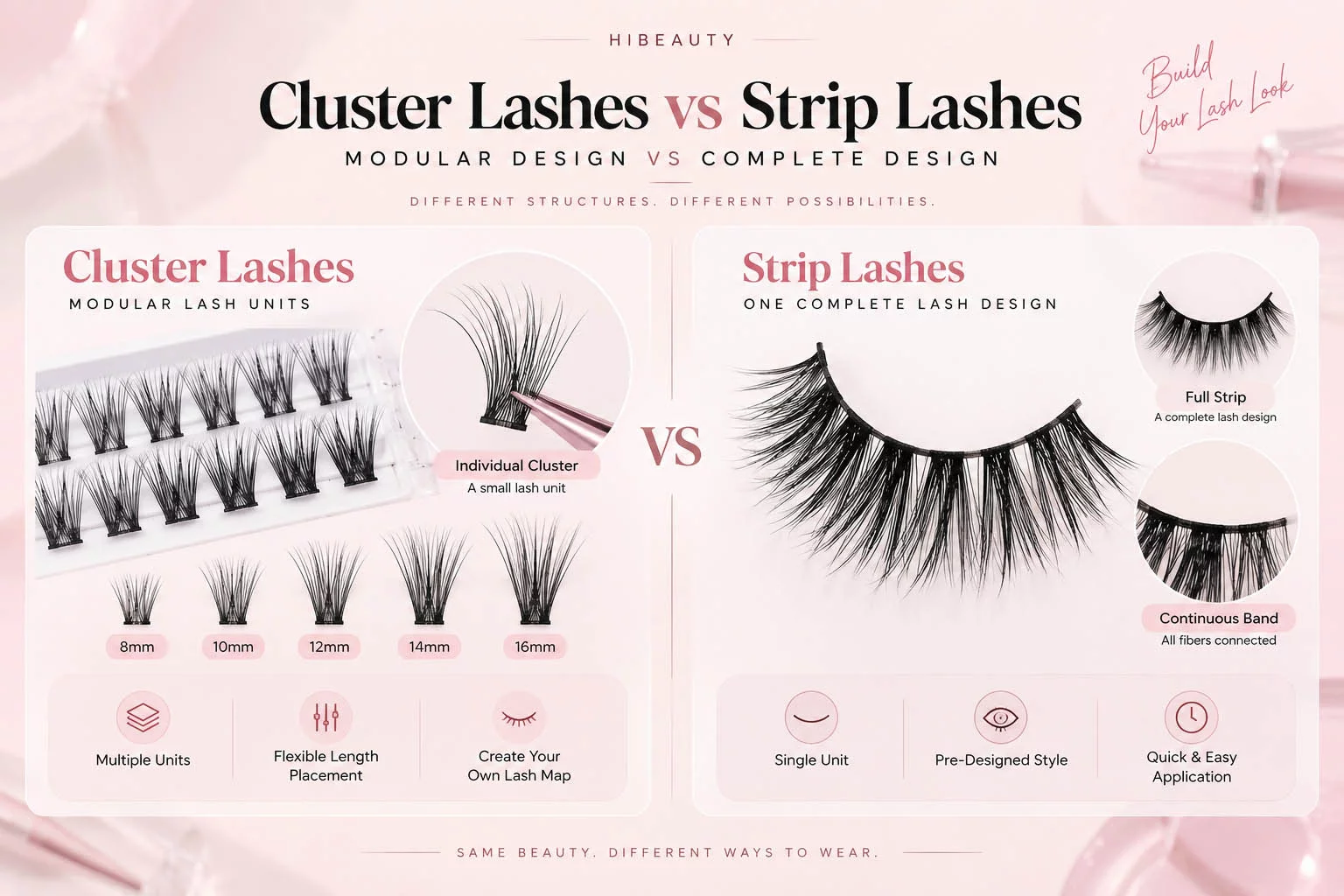
Cluster lashes consist of separate lash units that can be individually selected and combined across the lash line. Different lengths, densities, and cluster styles can be arranged together to create a customized lash map. Strip lashes, by contrast, connect the entire lash design to one continuous band, with the overall style and lash map largely determined during manufacturing.
This structural difference influences how the two products are applied, how easily the lash style can be changed, how long they can be worn, what adhesive systems they use, and how they can be developed into different product formats.
In simple terms:
Cluster Lashes = Modular Lash Units
Strip Lashes = One Complete Lash Design
This guide compares cluster lashes vs strip lashes across their structure, application, styling flexibility, wear, product formats, and brand development possibilities to help consumers and lash brands better understand where each format fits.
Cluster Lashes vs Strip Lashes: Quick Comparison
The biggest difference between cluster lashes and strip lashes is modularity. Cluster lashes divide the lash look into individual units that can be selected and combined, while strip lashes provide the complete lash look on a single continuous band.
| Feature | Cluster Lashes | Strip Lashes |
|---|---|---|
| Product Structure | Separate, modular clusters | One continuous lash strip |
| Application Unit | Individual clusters | Full strip |
| Lash Design | User-combined lash map | Pre-designed lash map |
| Styling Flexibility | High; mix lengths and styles | Limited to the strip design |
| Typical Wear | Single-day or multi-day | Short-term, typically single-day |
| Adhesive System | Normal lash glue, bond & seal, or pre-glued | Normal lash glue or pre-glued |
| Changing Styles | Rebuild or adjust the lash map | Switch the full strip |
| Common Product Formats | Individual, pre-mapped, press-on | Full strip, half lash, magnetic |
| Typical Applications | DIY lash systems and customized looks | Daily makeup and occasion wear |
Neither format is simply a replacement for the other. Cluster lashes provide modular control over how the lash map is built, while strip lashes provide a complete lash design in one continuous product. Which format makes more sense depends on the desired styling flexibility, wear period, application experience, and product concept.
What Is the Main Difference Between Cluster Lashes and Strip Lashes?
The main difference between cluster lashes and strip lashes is how the complete lash look is constructed.
Cluster lashes use separate, modular lash units available in different lengths, allowing users to arrange them across the lash line to create different lash maps. Strip lashes place the complete lash design on one continuous band, with both the style and overall length distribution largely determined during manufacturing.
This structural difference is the foundation for how the two products differ in styling flexibility, application, and wear.
Cluster Lashes: Modular Lash Units
Cluster lashes are individual lash units that are applied one by one across the lash line. A single cluster style is typically available in multiple lengths, such as 8 mm, 10 mm, 12 mm, 14 mm, and 16 mm.
The lash style itself—such as natural, wispy, fluffy, or volume—is created through the fiber arrangement, density, layering, and overall design of each cluster.
The lash map, however, can be changed by combining different lengths across the eye. For example, gradually increasing the length toward the outer corner can create a cat-eye or fox-eye layout, while placing longer clusters around the center can create a doll-eye or open-eye effect.
This means one cluster lash style can be used to create multiple eye-shape layouts simply by changing the length arrangement.
Strip Lashes: One Complete Lash Design
Strip lashes attach all lash fibers to one continuous band, creating a complete lash look that is applied as a single unit.
Both the lash style and length distribution are largely built into the strip during product design. A wispy cat-eye strip lash, for example, already combines its fiber pattern with a predetermined length progression across the band.
Users can trim the strip to fit the width of the eye, but they have much less control over rearranging the original lash map.
In simple terms, cluster lashes separate the lash style from the lash map, giving users more control over length placement, while strip lashes combine both into one complete, pre-designed lash structure.
How Do Cluster Lashes and Strip Lashes Differ in Application?
The different structures of cluster lashes and strip lashes lead to two distinct application methods.
Strip lashes are applied as one complete unit, while cluster lashes are placed individually across the lash line. This means strip lashes involve fewer placement steps, whereas cluster lashes provide more control over the position and length of each lash section.
Application Structure
Strip lashes are typically applied by adding lash adhesive to the band and positioning the entire strip along the lash line. Once the strip is aligned, the complete lash style is in place.
Cluster lashes are applied one cluster at a time. Users select the required lengths and position each cluster according to their chosen lash map. Depending on the desired wear time and product format, clusters may be used with regular lash glue, a DIY lash bond and seal system, or come with pre-applied adhesive that requires no additional glue.
The process involves more individual placement steps, but each cluster can be positioned separately to build the desired layout.
Styling Flexibility and Lash Mapping
The main advantage of the cluster application method is the ability to control where different lengths are placed.
A cluster style may be offered in several lengths, allowing users to create different eye-shape layouts without changing the underlying lash style. The same natural or wispy cluster design, for example, can be arranged into a cat-eye, fox-eye, doll-eye, or open-eye lash map by changing the length sequence.
With strip lashes, the length progression is already built into the strip. Users can choose a different strip style when they want a different lash map, but the original length arrangement of each strip remains largely fixed.
Changing Lash Styles
Strip lashes are well suited to users who frequently change their complete lash look. Since they are primarily designed for short-term or single-day wear, one strip style can be removed and replaced with another for the next makeup look.
Cluster lashes offer a different kind of flexibility. Users can change the lash map by changing how different lengths are arranged, but if the clusters are applied as a multi-day set, the existing set generally needs to be removed before creating a completely new lash map.
So, the flexibility works differently: strip lashes make it easy to switch between complete pre-designed styles, while cluster lashes provide more control over how the lash map itself is built.
How Long Do Cluster Lashes vs Strip Lashes Last?
Wear time is another important difference between cluster lashes and strip lashes.
Strip lashes are primarily designed for short-term, typically single-day wear, while cluster lashes can support multi-day wear when paired with a suitable DIY lash adhesive system. However, the actual retention time depends heavily on the adhesive formula, application, aftercare, and individual wearing conditions.
Cluster Lash Wear
Cluster lashes are commonly paired with a DIY lash glue system, typically consisting of lash bond and seal. Depending on the adhesive formula, many systems are designed to provide approximately 3–5 days of wear, while some long-wear formulas may support 7–14 days under suitable application and wearing conditions.
Cluster lashes can also be used for shorter wear periods with regular lash adhesive, so the lash itself does not determine a fixed retention time. Instead, the selected adhesive system allows the same general product format to serve different wearing needs.
Why Are Cluster Lashes Suitable for Multi-Day Wear?
Cluster lashes are well suited to multi-day wear because their structure supports both wearing comfort and stable adhesive retention.
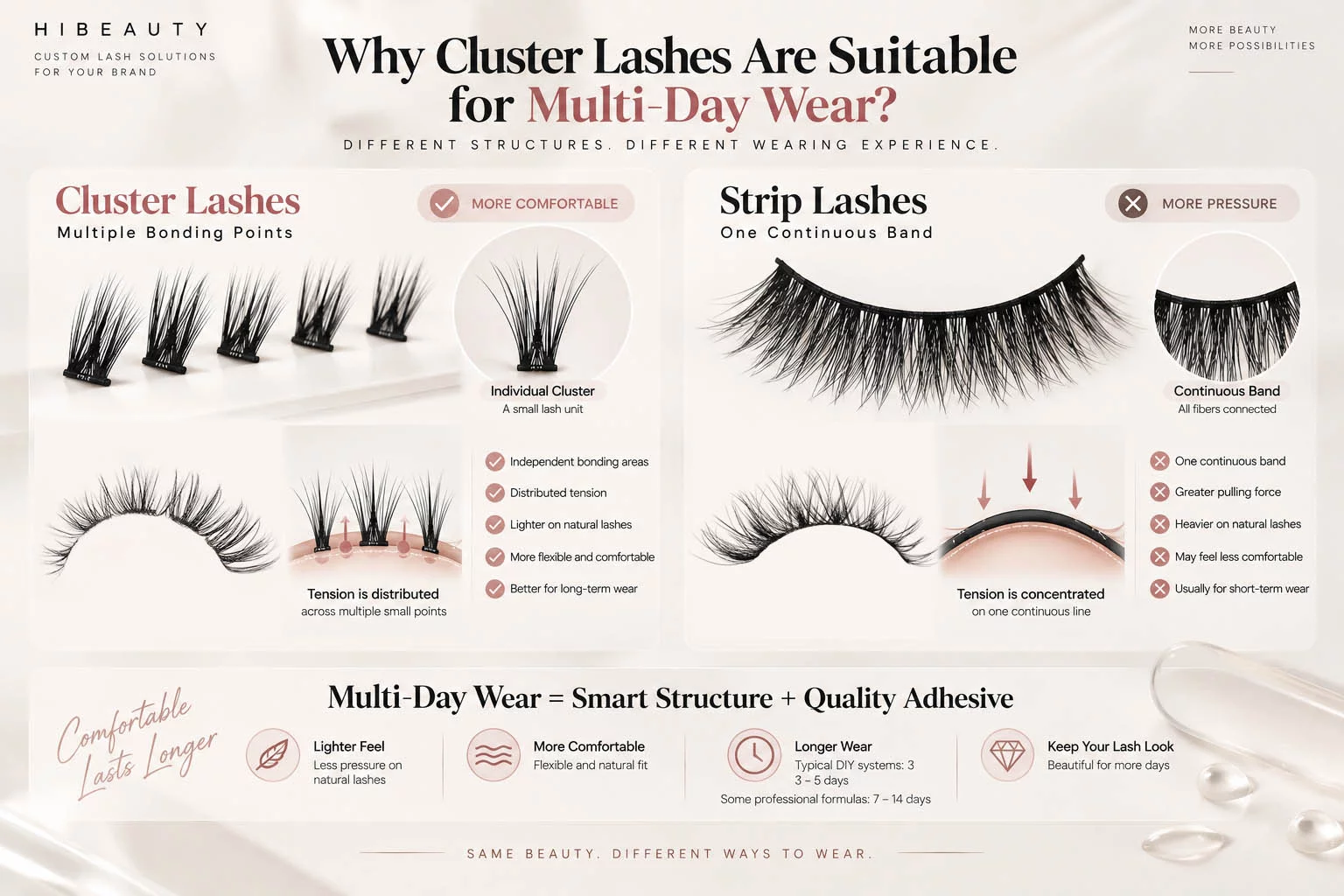
First, individual clusters are small and lightweight. Their shorter bases can conform to different sections of the lash line independently, rather than relying on one continuous band across the entire eye. This reduces bulk and helps the lash set feel more comfortable during extended wear.
More importantly, the segmented structure helps distribute mechanical tension across multiple independent bonding areas. As the eyes blink and the lash line moves, each cluster can respond more independently instead of transferring movement and tension along one continuous lash band.
This can reduce the effect of lifting at one point on the rest of the lash set. Each cluster also carries only its own relatively small weight, placing less mechanical stress on its individual bonded area.
Strip Lash Wear
Strip lashes are primarily designed for short-term or single-day wear. They are typically applied with regular strip lash glue and removed after the makeup look or occasion.
With conventional strip lash adhesive, the intended wear period is generally within 24 hours, rather than continuous multi-day wear.
The continuous lash band also makes strip lashes better suited to this type of temporary application: the entire lash can be applied and removed as one complete unit when the user wants to change the look.
When paired with a DIY lash bond and seal system, this lightweight, segmented structure provides a suitable foundation for longer retention. The cluster design helps maintain comfortable and stable contact, while the adhesive formulation determines how long the bond is designed to last.
In other words, multi-day wear comes from the combination of two factors: a lightweight, low-tension cluster structure and an adhesive system formulated for extended retention.
What About Pre-Glued Lashes?
Both cluster lashes and strip lashes are also available in pre-glued formats, with adhesive already applied to the lash base or band for application without separate lash glue.
Pre-glued technology changes the adhesive and application method, not the basic lash structure. A pre-glued cluster lash remains a modular cluster product, while a pre-glued strip lash remains a complete lash design on a continuous band.
How Adhesive Systems Affect Retention
Wear time depends heavily on the adhesive system. Cluster lashes paired with DIY bond and seal are commonly designed for around 3–5 days of wear, while some longer-wear formulas may support 7–14 days. Strip lashes used with regular lash glue are typically intended for wear within 24 hours. Pre-glued versions are available for both formats, with retention depending on the specific adhesive formulation.
Actual wear time can vary with application, aftercare, and individual wearing conditions.
What Product Formats Are Available?
Both cluster lashes and strip lashes have evolved into multiple product formats, but each format still follows the same basic structure: cluster lashes remain modular lash units, while strip lashes remain complete lash designs on a continuous band.
Cluster Lash Formats
Common cluster lash formats include:
Separate clusters offered in different lengths, allowing users to build their own lash map and control the length placement across the eye.
Clusters are organized into a predetermined length sequence, making it easier to recreate a specific lash map while retaining the segmented cluster structure.
Pre-Glued / Press-On Lash Clusters
Cluster lashes with adhesive already applied to the base. They maintain the same modular structure but eliminate the need to apply a separate bond before placement.
Across these formats, cluster styles can include natural, wispy, fluffy, volume, and other fiber designs, with different lengths available for creating different lash maps.
Strip Lash Formats
Strip lashes are also available in several formats:
The standard format, with the complete lash design attached to one continuous band.
Shorter strip designs typically positioned toward the outer portion of the lash line for more targeted enhancement.
Magnetic Strip Lashes
Strip lashes designed to work with a magnetic attachment system rather than conventional lash glue.
Strip lashes with adhesive already applied to the band for application without separate lash glue.
Regardless of the format, the fundamental distinction remains the same: cluster lashes divide the lash look into modular units, while strip lashes keep the lash design together as one complete piece.
What Do the Differences Mean for Lash Brands?
For lash brands, the difference between cluster lashes and strip lashes goes beyond the application method. Their different structures also influence how products are developed, customized, combined, and positioned within a lash collection.
Product Line Structure
With strip lashes, each lash style is essentially a complete finished design. Different natural, wispy, cat-eye, dramatic, or other designs can be developed as separate products within the collection.
With cluster lashes, one lash style can be offered in multiple lengths and then expanded into different product formats or lash maps. Brands can offer individual lengths, mixed-length trays, pre-mapped sets, or complete DIY lash kits based on the same underlying cluster design.
This gives the two categories different approaches to building a product range: strip lash collections are primarily expanded through complete lash designs, while cluster lash collections can also be expanded through lengths, lash maps, and product formats.
Customization Opportunities
Both formats provide extensive customization possibilities, but the development focus is different.
For strip lashes, customization typically centers on fiber design, density, curl, band structure, overall lash shape, and packaging.
For cluster lashes, brands can additionally develop different cluster lengths, base structures, lash maps, tray combinations, and adhesive systems around the same lash style.
For example, one wispy cluster design can be developed into multiple lengths, a mixed tray, a pre-mapped set, or a pre-glued version without changing its core fiber style.
Kits and Product Ecosystems
Cluster lashes also provide more opportunities to build a broader DIY lash system around the core product.
A complete range may combine lash clusters, bond and seal, remover, applicator tweezers, and different kit configurations. Pre-glued cluster lashes can create another product line without requiring a separate adhesive during application.
Strip lashes generally follow a simpler product system built around the lash, strip lash adhesive, applicator, and related accessories.
Neither approach is inherently better for a brand. They represent different ways of organizing a lash collection and serving different application preferences.
Packaging and Retail Positioning
The product structure also affects how lashes can be presented and packaged.
Strip lashes are commonly displayed as a complete pair, making the finished lash style immediately visible in the packaging.
Cluster lash packaging often needs to communicate additional information such as lengths, lash maps, cluster arrangement, adhesive system, or kit contents, especially for mixed trays and DIY lash kits.
For brands developing either category, these differences should be considered together with the lash design rather than treating packaging as a separate final step.
Cluster Lashes vs Strip Lashes: Which Should You Choose?
The choice between cluster lashes and strip lashes depends on the desired wear time, styling method, and application experience.
Cluster lashes may be a better fit when the goal is to:
Build different lash maps by arranging multiple lengths
Create a more customized fit across the lash line
Support both short-term and multi-day wear
Use a DIY bond and seal or pre-glued lash system
Strip lashes may be a better fit when the goal is to:
Apply a complete lash design as one piece
Change the entire lash style frequently
Wear lashes primarily for a day, makeup look, or occasion
Choose from ready-designed lash shapes without building a lash map
For lash brands, the decision also depends on the type of product line being developed. Cluster lashes support a modular DIY lash system built around different lengths, lash maps, adhesives, and kits, while strip lashes provide complete ready-designed lash styles that can be offered as individual designs or collections.
Many brands may include both formats for different customer needs rather than treating them as direct replacements for one another.
FAQ About Cluster Lashes vs Strip Lashes
Are Cluster Lashes Better Than Strip Lashes?
Neither format is better for every use case. Cluster lashes provide more control over length placement and lash mapping and can support both short-term and multi-day wear. Strip lashes provide a complete, pre-designed lash look that can be applied and removed as one piece.
The better fit depends on the desired lash look, wear time, and application preference.
Are Cluster Lashes Easier to Apply Than Strip Lashes?
The application methods are different rather than universally easier or harder.
Strip lashes require positioning and aligning one complete lash band. Cluster lashes involve placing several smaller lash units individually, which requires more placement steps but allows each section to be positioned separately.
Pre-mapped and pre-glued cluster formats can further simplify the cluster lash application process.
Do Cluster Lashes Last Longer Than Strip Lashes?
They can, depending on the adhesive system.
Strip lashes used with regular lash glue are typically intended for short-term wear within 24 hours. Cluster lashes used with a DIY bond and seal system are commonly designed for around 3–5 days, while some longer-wear adhesive formulas may support 7–14 days.
Actual retention varies with the adhesive formulation, application, aftercare, and individual wearing conditions.
Are Cluster Lashes More Natural Than Strip Lashes?
Both can create natural-looking results. The appearance depends on factors such as fiber design, density, length, base or band structure, and application.
Cluster lashes allow different lengths to be arranged according to the eye shape and have separate small bases rather than one continuous band. Strip lashes can also create a natural effect through lightweight fibers, fine bands, and a well-designed lash shape.
Natural appearance therefore depends more on product design and fit than on the lash format alone.
Can Cluster Lashes and Strip Lashes Be Reused?
Both may be reusable, depending on the product construction, adhesive, removal method, and condition after wear.
Strip lashes are often removed as one complete piece and may be reused if the band and fibers remain in good condition. Some cluster lashes can also be reused, although adhesive residue and cleaning may affect their smaller bases.
There is no universal reuse count for either format, so the manufacturer's recommendations should be followed.
Can You Wear Cluster Lashes Every Day?
Cluster lashes can be developed for different wearing periods, from short-term use to multi-day DIY lash systems. How often they are worn should follow the instructions for the specific lash and adhesive system, including its recommended application and removal method.
For multi-day products, proper removal is particularly important rather than pulling the clusters directly from the natural lashes.
Conclusion
The key difference between cluster lashes and strip lashes comes down to how the lash look is built. Cluster lashes use modular units and multiple lengths to build the lash map across the eye, while strip lashes combine the complete lash design on one continuous band.
That structural difference influences everything from application and styling flexibility to adhesive systems, wear time, and product development. Rather than one format replacing the other, they serve different wearing preferences and product concepts.
For lash brands, understanding these differences makes it easier to decide how each format fits into a product collection. HIBEAUTY works with beauty brands to develop both wholesale cluster lashes and custom strip lashes, with customization available across lash styles, lengths, base or band structures, adhesive systems, packaging, and private label options.
Visit HIBEAUTY to explore our lash manufacturing and customization capabilities or contact us to discuss your next lash product.
What Are Pre-Glued Lashes? A Guide to Press-On Lashes
Learn what pre-glued and press-on lashes are, how they work, different types, and how long they last. Explore lash styles, wear time, and key differences.
What Are Lash Clusters Made Of? A Manufacturer's Guide
What are lash clusters made of? Learn about PBT lash fibers, fiber processing, band and base materials, and how construction affects cluster lash quality.
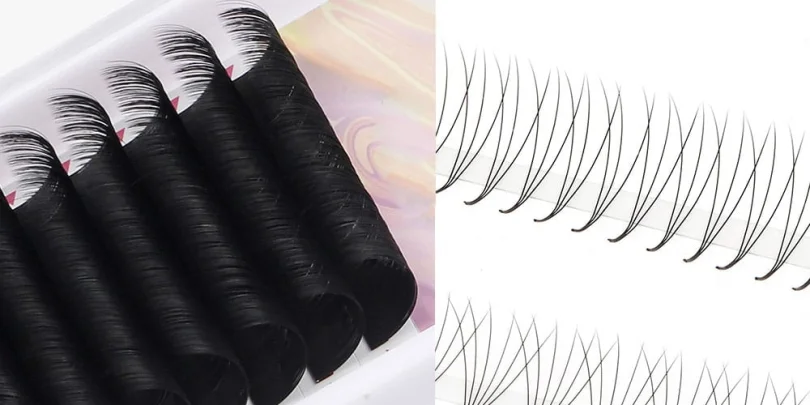
Handmade Fans vs Premade Fans: Which One Fits Your Lash Business?
Compare handmade fans vs premade fans in terms of cost, time, quality, and efficiency. Discover which option is best for your lash business and how to maximize profit.
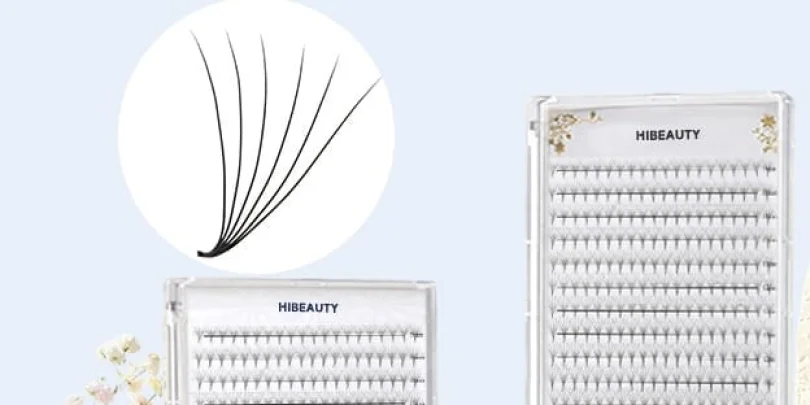
What Are Premade Fans? A Professional Guide to Premade Volume Fans for Lash Brands
What are premade volume fans? Get detailed info on materials, structure, types, advantages, and buying tips. Ideal for lash artists, salons, and wholesale lash brands.
Empowering Every Lash Brand: From Your First 100 Trays To Global Expansion.
-
 Scalable Production
Flexible volume support for every stage of your growth.
-
One-Stop Innovation
Bespoke lash engineering and free turnkey branding in one place.
-
Certified Excellence
100% manual QC and SGS/MSDS compliance for premium reliability.
-
Agile Supply
Rapid sampling paired with stable, long-term mass production.
-
Brand Partnership
We don't just supply products; we build your empire.



