

Table of Contents
Curved band lash clusters are groups of false eyelashes connected by a curved base rather than a conventional straight lash band. The curved structure is designed to follow the natural contour of the lash line, addressing common application challenges associated with straight bands, such as lifting edges, visible gaps between clusters, and discomfort near the inner corners.
Curved band lash clusters are available in different structures, including regular curved, reverse curved, and auto-curve designs. A curved band cluster can also be produced with different lash curls, lengths, densities, and styling arrangements. The band shape is one design feature rather than a complete lash style.
How Do Curved Band Lash Clusters Work, and What Are Their Benefits?
The key difference becomes clear when placing multiple lash clusters along the lash line. A conventional straight band retains its linear shape during application, so each cluster must be carefully angled and positioned to follow the eye's natural contour.
A curved band, by contrast, already incorporates the curvature into its base design. This changes how the band aligns with the lash line and how neighboring clusters can be positioned together.
The following three differences explain the practical advantages of curved band lash clusters.
1. Better Lash-Line Fit and Fewer Lifting Edges
One of the main challenges with straight band lash clusters is achieving consistent contact along the entire base.
Because the band is straight, positioning one section correctly does not necessarily mean both ends will sit equally well against the curved lash line. When the application angle is slightly off, an edge may lift or become more noticeable.
Curved band lash clusters are designed to reduce this mismatch.
Their curved profile can follow the lash line more closely, allowing the center and ends of the band to sit in a more coordinated position. This helps reduce the likelihood of raised edges caused by unsuitable placement angles.
A smoother band position can also contribute to a more continuous appearance along the lash line.
The result still depends on the selected band design and application technique, but the curved structure directly addresses a limitation of straight band geometry.
2. Reduced Discomfort Around the Inner Eye Corner
The inner corner is one of the more challenging areas for applying lash clusters.
The available placement space is smaller, and a straight band may extend toward the sensitive inner corner when the cluster is not positioned correctly. Its relatively rigid linear shape can create a noticeable edge or poking sensation.
Curved band clusters are designed to follow the local lash-line contour rather than extending in a straight direction.
This can help reduce the likelihood of an uncomfortable band edge pressing toward the inner corner, particularly when a suitable cluster length and placement position are selected.
A curved band does not eliminate every possibility of irritation, but its geometry offers an alternative to the straight edges that can cause discomfort during poorly positioned applications.
3. Smaller Gaps and Smoother Overlapping Between Clusters
Creating a seamless lash line requires neighboring clusters to sit closely together. With straight band clusters, the rigid linear edges can leave small gaps between adjacent sections, especially when arranged along the curved lash line. Overlapping these straight edges can also create uneven contact points that feel uncomfortable during wear.
Curved band clusters are designed to address both issues. Their curved edges allow neighboring clusters to sit closer together and overlap more smoothly, reducing visible gaps and creating a more continuous lash line. This also helps minimize the discomfort caused by uneven or bulky overlapping band edges.
The result is a more seamless transition between clusters, particularly when creating fuller lash looks that require close placement or overlapping sections.
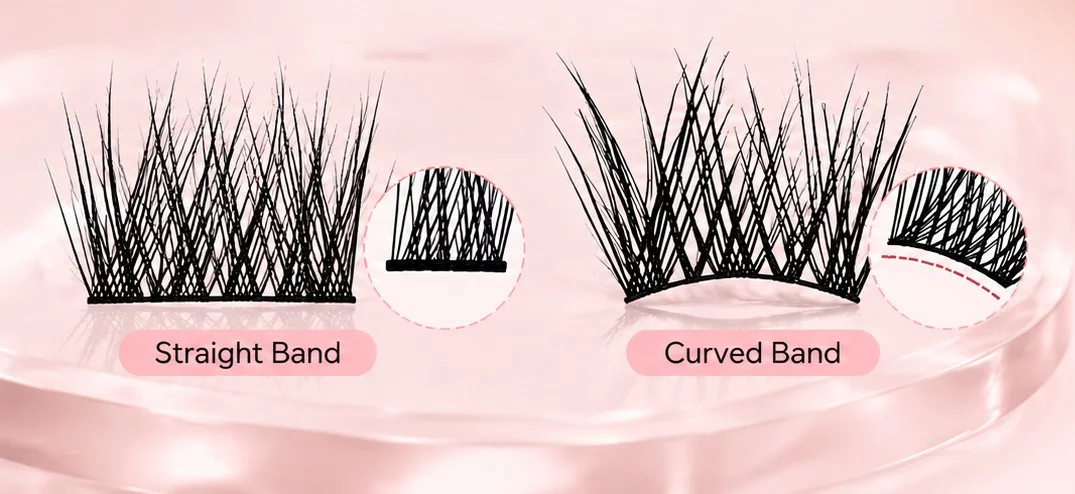
Curved Band vs. Straight Band Lash Clusters: Key Differences
| Feature | Straight Band Clusters | Curved Band Clusters |
|---|---|---|
| Band Shape | Straight, linear base | Curved base profile |
| Lash-Line Fit | Requires careful angle adjustments | Designed to follow the lash-line contour |
| Edge Lifting | More likely when placement is misaligned | Curvature can help reduce raised edges |
| Inner Corner Comfort | Straight edges may cause poking if poorly positioned | Curved geometry can reduce uncomfortable edge contact |
| Cluster Gaps & Overlapping | Straight edges may leave gaps or create uneven overlapping points | Curved edges allow closer placement and smoother overlapping |
| Finished Appearance | Depends heavily on individual cluster positioning | Can help create a more continuous lash line |
These differences explain why curved band lash clusters are being developed as an alternative to conventional straight band designs. Their main advantage is not a different lash fiber or styling effect, but the way the base geometry supports placement along the lash line.
Different Types of Curved Band Lash Clusters
Not all curved band lash clusters use the same curvature.
The main differences lie in the direction of the curve and whether the band is pre-shaped or develops its curvature after being removed from the lash tray.
Regular Curved Band Lash Clusters
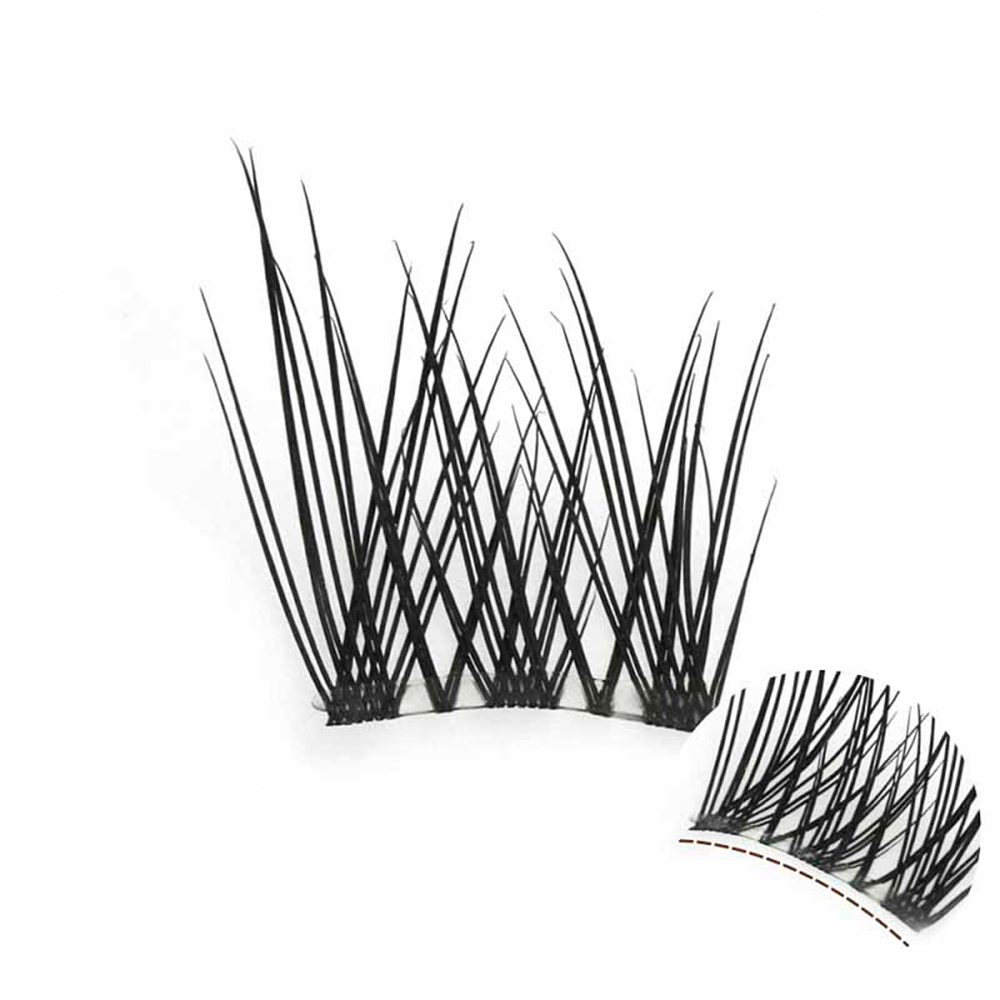
Regular curved band lash clusters feature a pre-shaped band that follows the natural curvature of the eyelid and lash line.
This design allows the band to sit more closely along the curved lash line, helping improve alignment and reduce the likelihood of lifting edges caused by improper positioning.
Compared with conventional straight bands, regular curved bands provide a base shape that more naturally follows the eye's contour, making them a practical option for creating a smooth, continuous lash line.
Reverse Curved Band Lash Clusters
Reverse curved band lash clusters feature a pre-shaped band that curves in the opposite direction to the natural curvature of the eyelid and lash line.
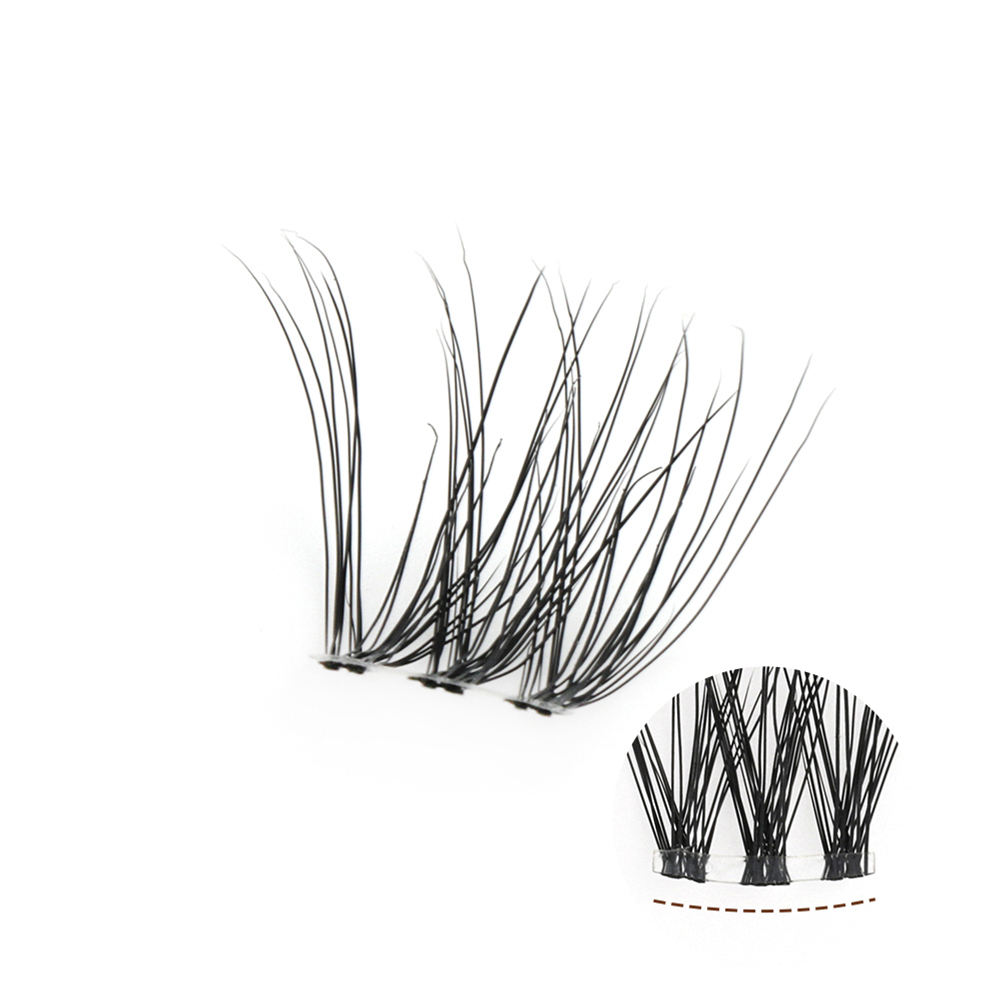
Rather than following the eye's contour in the same way as a regular curved band, the reverse curve is designed to provide greater structural support and facilitate overlapping between neighboring lash clusters.
This structure allows adjacent band edges to overlap more smoothly, helping reduce visible gaps and uneven contact points. It can also make overlapping applications more comfortable, particularly when building fuller lash looks that require clusters to be positioned closely together.
Auto-Curve Band Lash Clusters
Auto-curve band lash clusters are designed to develop their curved shape after being removed from the lash tray.
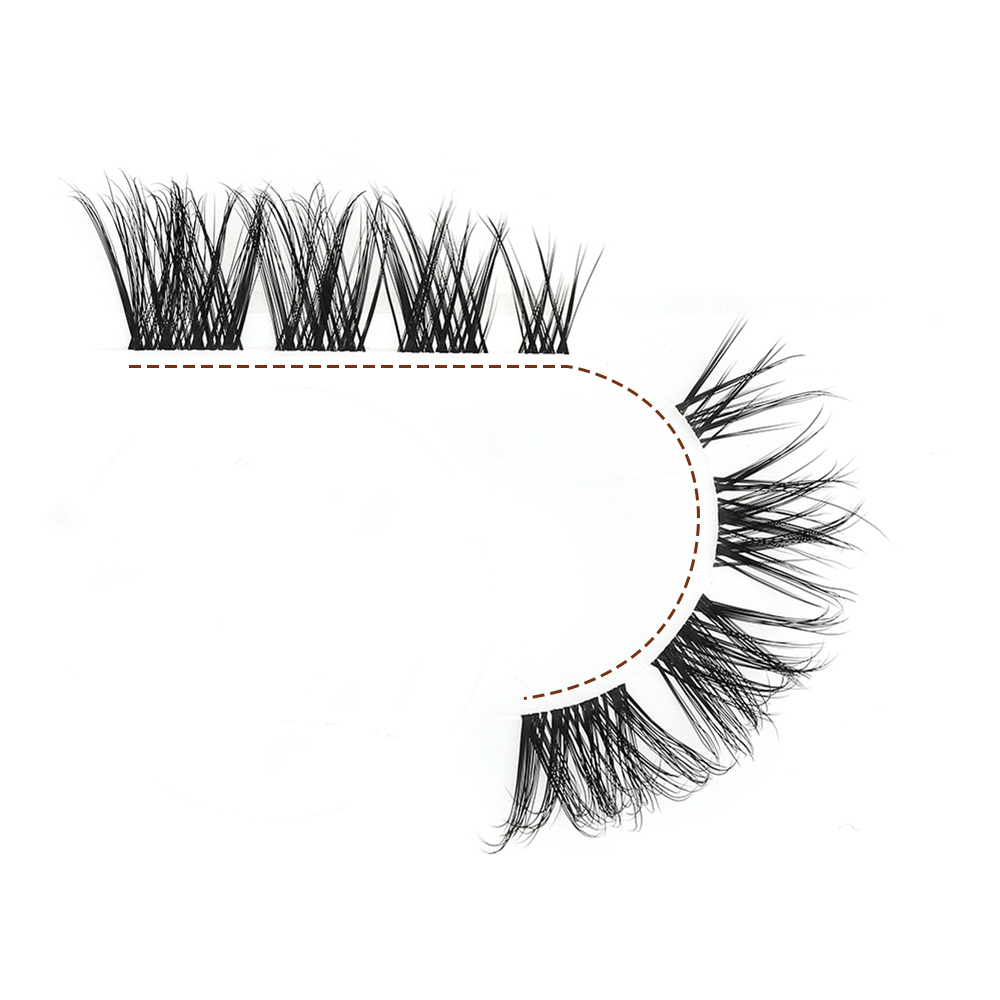
While attached to the tray, the band appears relatively straight. Once the cluster is picked up, the base naturally forms a curved profile.
This allows the band to transition from its tray arrangement into a curved structure ready for application.
Unlike regular and reverse curved bands, which are distinguished primarily by the direction of their pre-shaped curvature, auto-curve bands are defined by how the curvature forms.
The resulting curve is intended to help the cluster follow the lash line, although its exact shape and application characteristics depend on the product design.
What Band Structures Are Used in Curved Lash Clusters?
Curved band lash clusters can be made with different base constructions.
The curvature describes the shape of the band, while the base construction determines its physical structure and material characteristics.
Superfine Curved Bands
Superfine bands use a conventional narrow, fine lash base. This is a common construction found in curved band lash cluster products on the market.
The slim band profile provides a relatively fine connection between the lash fibers while incorporating the curved design.
Film Base Curved Bands
HIBEAUTY also offers film base curved lash clusters.
Film bands feature an ultra-thin, flat base with a defined width. Unlike narrow superfine bands, the film structure maintains a wider, flat surface while remaining thin and lightweight.
This provides a different base construction for curved lash designs, with black and clear film band options available in relevant product series.
Silicone Curved Bands
Silicone curved bands are another structure offered by HIBEAUTY.
These designs use a silicone-based curved base, providing an alternative to conventional superfine and film band constructions.
The silicone structure can be developed with a defined contact surface and curved profile, offering additional options for lash band design.
The availability of particular curvature profiles, materials, and lash styles depends on the specific product series.
Can Curved Band Lash Clusters Be Pre-Glued?
Yes. Curved band lash clusters can be customized with pre-applied adhesive strips to create pre-glued lashes, also known as press-on or self-adhesive lash products.
The process involves selecting a suitable curved band lash style and adding a compatible adhesive strip to the base. This allows the clusters to be applied without using a separate lash glue.
The curved band structure and the adhesive system serve different purposes. The curved band determines the shape and positioning characteristics of the base, while the pre-applied adhesive provides the attachment method.
As a result, curved band lash clusters can be developed in traditional glue-on or pre-glued formats, depending on the product design.
For lash brands, this also creates opportunities to combine curved band structures with different lash styles and application preferences.
Frequently Asked Questions
Are Curved Band Lash Clusters Easier to Apply Than Straight Band Clusters?
Curved band clusters can make certain placement steps easier because the base is designed to follow the lash-line contour. This may reduce the amount of positioning adjustment needed, particularly when placing clusters close together.
However, application still requires suitable positioning, adhesive use, and attention to the inner and outer corners.
Can Curved Band Lash Clusters Be Used for Natural and Dramatic Lash Styles?
Yes. The curved band describes the base structure rather than the finished lash style.
Curved band clusters can be developed with different lengths, curls, densities, and fiber arrangements to create natural, wispy, cat-eye, doll-eye, or dramatic looks.
Do Curved Band Lash Clusters Last Longer?
Not necessarily. Curved bands are designed to improve the relationship between the lash base and the natural lash line, but retention also depends on adhesive performance, application technique, and aftercare.
A curved band should not automatically be considered longer-lasting without product-specific testing.
Why Are Curved Band Lash Clusters Worth Considering for Lash Brands?
For lash brands, curved band clusters offer more than a new lash style. They introduce a structural difference that addresses common application challenges associated with traditional straight band clusters, including lifting edges, inner-corner discomfort, and visible gaps between neighboring clusters. These practical features give brands a clearer product story built around application experience rather than appearance alone.
Curved band designs also create opportunities to expand existing lash collections. Brands can explore regular curved, reverse curved, and auto-curve structures alongside different lash styles, lengths, and densities. With options such as film, silicone, and superfine bases, as well as traditional glue-on and pre-glued formats, curved band clusters can support different product concepts and customer preferences.
Final Thoughts
Curved band lash clusters introduce a practical structural improvement to conventional DIY lash clusters by replacing the straight base with a curved profile designed around the natural lash line.
The most noticeable differences appear during application: curved bands can help reduce raised edges, minimize gaps between clusters, improve inner-corner positioning, and support smoother overlapping between neighboring lash sections.
Regular curved, reverse curved, and auto-curve bands offer different approaches to this design, while superfine, film, and silicone bases provide additional structural options.
For lash users, the main value lies in a band shape that can make placement and the finished lash line feel more natural. For lash brands, these structural variations provide another way to develop differentiated cluster lash collections.
As a wholesale curved band lash cluster supplier, HIBEAUTY offers curved band products and customization options for lash brands looking to develop differentiated collections. From band structure and lash styling to adhesive formats and private label packaging, brands can explore product combinations suited to their positioning and target customers.
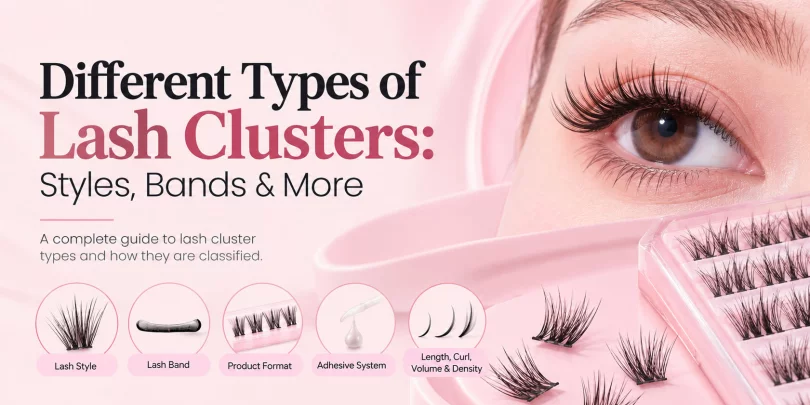
Different Types of Lash Clusters: Styles, Bands & More
Explore different types of lash clusters by style, band design, adhesive system, length, and curl. Learn how DIY cluster lashes are classified.
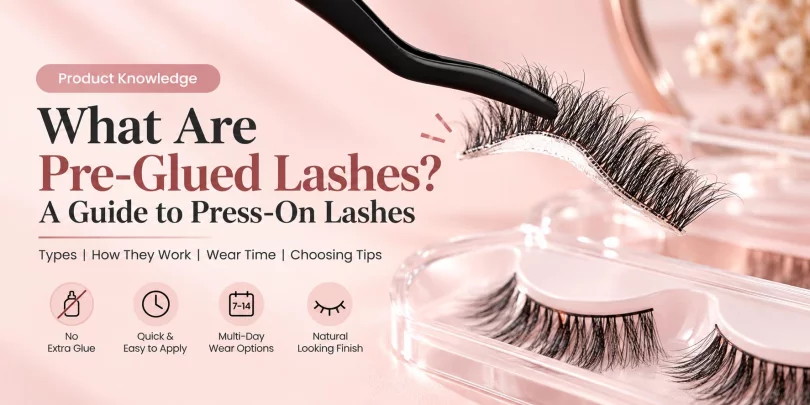
What Are Pre-Glued Lashes? A Guide to Press-On Lashes
Learn what pre-glued and press-on lashes are, how they work, different types, and how long they last. Explore lash styles, wear time, and key differences.
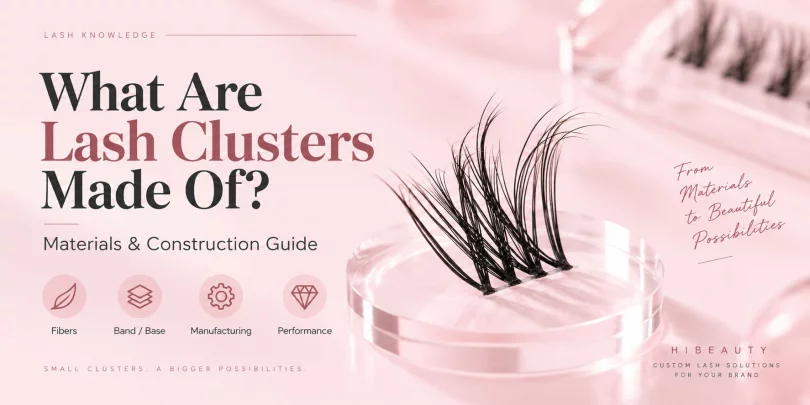
What Are Lash Clusters Made Of? A Manufacturer's Guide
What are lash clusters made of? Learn about PBT lash fibers, fiber processing, band and base materials, and how construction affects cluster lash quality.
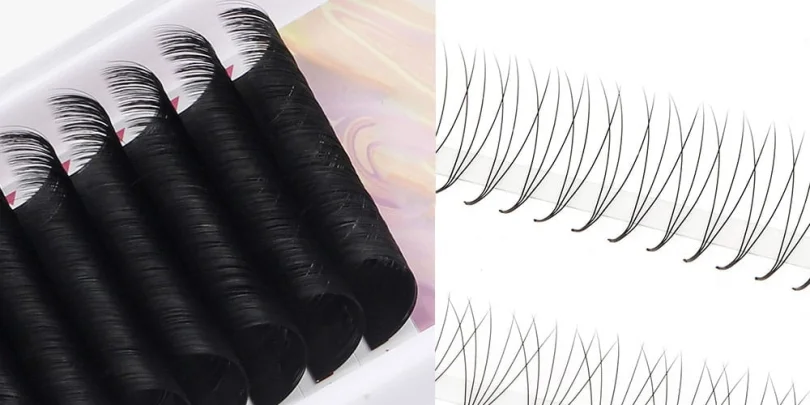
Handmade Fans vs Premade Fans: Which One Fits Your Lash Business?
Compare handmade fans vs premade fans in terms of cost, time, quality, and efficiency. Discover which option is best for your lash business and how to maximize profit.
Empowering Every Lash Brand: From Your First 100 Trays To Global Expansion.
-
 Scalable Production
Flexible volume support for every stage of your growth.
-
One-Stop Innovation
Bespoke lash engineering and free turnkey branding in one place.
-
Certified Excellence
100% manual QC and SGS/MSDS compliance for premium reliability.
-
Agile Supply
Rapid sampling paired with stable, long-term mass production.
-
Brand Partnership
We don't just supply products; we build your empire.



